In a world where our personal, professional, and financial lives are stored on servers and in the cloud, digital security has become an essential part of modern existence. Yet, no matter how robust our systems seem, breaches, fraud, and cyberattacks are inevitable.
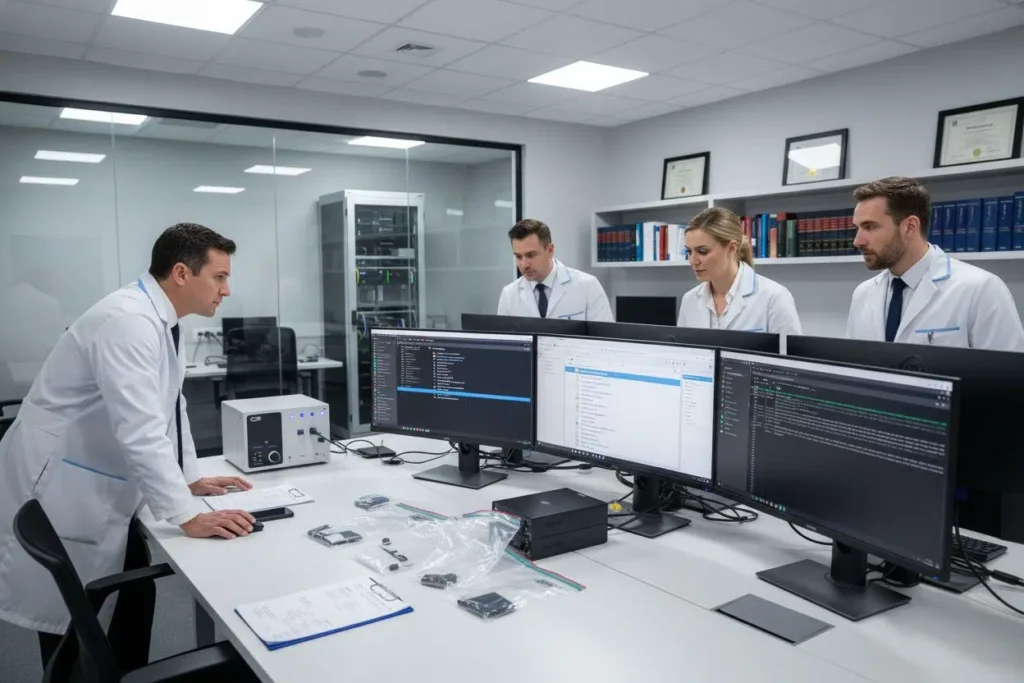 When digital incidents strike — from ransomware locking up crucial data to an employee leaking confidential information — a Forensic IT Specialist becomes your first line of defence and your last hope for recovery.
These specialists are not ordinary IT professionals. They are trained investigators who merge computer science, cybersecurity, and legal knowledge to recover, preserve, and interpret digital evidence. Their work forms the bridge between complex technology and clear legal accountability.
Understanding the Role of a Forensic IT Specialist
What Does a Forensic IT Specialist Do?
A Forensic IT Specialist investigates digital environments to uncover how an incident occurred, who was responsible, and what the impact was. Their tasks include identifying compromised systems, recovering deleted or encrypted files, analysing network activity, and preparing reports that may later be used in legal or disciplinary proceedings.
Unlike standard IT technicians, forensic specialists must maintain the integrity of evidence at every step. Their findings are often critical in corporate disputes, criminal cases, and regulatory audits.
Common scenarios where forensic IT specialists are called in include:
- Corporate espionage: Tracking stolen trade secrets or leaked documents.
- Cyber fraud: Investigating unauthorised financial transactions.
- Data breaches: Identifying points of entry and compromised records.
- Legal discovery: Extracting evidence from devices and email systems.
Their investigative process is meticulous, involving data imaging, evidence verification, timeline reconstruction, and court-ready documentation.
The Growing Need for Forensic IT in the UK
The UK faces one of the highest rates of cybercrime in Europe. According to the National Cyber Security Centre (NCSC), over 60% of small businesses reported some form of cyber incident in the past 12 months, while large corporations face daily attempts at intrusion.
High-profile cases such as the British Airways data breach and the WannaCry ransomware attack on the NHS highlight how damaging these incidents can be — not just financially, but reputationally.
As a result, forensic IT specialists are no longer just “post-incident responders.” They are now strategic partners in preventing cybercrime, protecting data, and ensuring compliance with the UK’s strict regulatory environment.
Key Skills and Expertise of a Forensic IT Specialist
Technical Proficiency in Digital Forensics
Forensic IT Specialists possess a unique blend of technical mastery and investigative acumen. They are fluent in multiple operating systems (Windows, Linux, macOS, iOS, and Android), and can extract and interpret data across networks, hard drives, and cloud services.
They use advanced forensic tools such as:
- EnCase – for comprehensive data recovery and analysis.
- FTK (Forensic Toolkit) – to search and verify large data sets.
- Autopsy and Sleuth Kit – open-source platforms for file analysis.
- Cellebrite and Oxygen Forensics – for mobile device data extraction.
Their work requires not only technical competence but also the patience to sift through vast quantities of data — sometimes terabytes’ worth — to uncover a single crucial clue.
Analytical and Legal Expertise
A true forensic specialist must also think like a lawyer. Every action they take must stand up to scrutiny in court. That means maintaining an unbroken chain of custody, ensuring all evidence is properly documented, timestamped, and securely stored.
Their reports must translate complex technical findings into clear, non-technical language suitable for judges, solicitors, and juries.
This combination of technical and legal literacy makes forensic IT specialists indispensable in litigation support, regulatory compliance, and criminal investigations.
Why Businesses Need a Forensic IT Specialist
Preventing and Responding to Cyber Incidents
Every organisation, from small businesses to multinational corporations, is a potential target. Hackers no longer discriminate — they exploit opportunity.
A Forensic IT Specialist helps by identifying vulnerabilities before they’re exploited and responding rapidly when they are.
When a cyberattack occurs, the specialist will:
- Isolate affected systems to prevent further damage.
- Create exact forensic images of compromised devices.
- Analyse network logs to trace the source of the intrusion.
- Recover stolen or deleted data.
- Provide detailed reports for insurers, regulators, or legal teams.
Their ability to act quickly and methodically can save companies millions in potential losses.
Supporting Legal and Regulatory Compliance
For organisations in the UK, compliance with laws such as the General Data Protection Regulation (GDPR) and the Data Protection Act 2018 is non-negotiable. A breach involving personal data can result in fines of up to £17.5 million or 4% of annual turnover, whichever is higher.
A Forensic IT Specialist ensures that any investigation adheres to these laws, from how data is accessed to how it’s reported. They also help develop forensic readiness policies, enabling businesses to respond legally and effectively if a breach occurs.
10 Ways a Forensic IT Specialist Can Help You
1. Data Breach Investigation
When your systems are compromised, identifying the cause and impact is essential. A forensic IT specialist uses advanced monitoring tools to reconstruct the attack timeline — determining whether it was internal, external, or a combination of both.
They analyse access logs, server configurations, and endpoint activity to pinpoint vulnerabilities and provide actionable recommendations.
2. Digital Evidence Recovery
Whether a user intentionally deleted incriminating files or malware wiped critical data, forensic specialists can often recover it. Using imaging and hashing techniques, they ensure the recovered data remains authentic and legally admissible.
This service is particularly valuable for:
-
Law firms handling digital discovery.
-
HR departments investigating misconduct.
-
Businesses dealing with fraud or compliance issues.
3. Cybercrime Detection and Prevention
Beyond investigating attacks, forensic specialists proactively monitor systems for suspicious behaviour. Using behavioural analytics and intrusion detection systems, they identify anomalies like unauthorised logins, data transfers, or encryption patterns — often catching breaches before they escalate.
4. Insider Threat Detection
Internal threats are a growing problem for UK organisations. A Forensic IT Specialist investigates cases of intellectual property theft, unauthorised data access, or employee misconduct.
They analyse system activity, email exchanges, and removable media logs to uncover digital footprints left behind by insider actors — while ensuring that investigations respect privacy and HR protocols.
5. Malware and Ransomware Analysis
When a business falls victim to ransomware or malicious software, time is of the essence. A forensic specialist dissects the malware’s code, identifies its origin, and helps the organisation determine whether data can be safely decrypted or recovered.
They also advise on whether paying a ransom is technically viable or legally advisable — a crucial decision many businesses face during such crises.
6. Cloud and Network Forensics
As more organisations migrate to cloud infrastructure, traditional forensic techniques have evolved. Specialists can now retrieve and analyse digital evidence from AWS, Microsoft Azure, and Google Cloud environments.
They reconstruct user sessions, trace unauthorised access, and ensure compliance with regional data sovereignty laws.
7. Expert Testimony in Legal Cases
When disputes escalate into legal proceedings, a Forensic IT Specialist may serve as an expert witness. They present their findings in plain language, explaining how the data was obtained, what it reveals, and why it can be trusted.
Their impartial, evidence-based approach can be decisive in determining outcomes in both civil and criminal courts.
8. Data Integrity and Preservation
One of the most critical aspects of digital forensics is preserving the original evidence. Specialists use bit-by-bit imaging to ensure no alterations occur, maintaining the authenticity required for court proceedings.
This meticulous approach ensures that your digital evidence remains beyond dispute — even months or years after the event.
9. Cyber Risk Consultancy
Prevention is better than cure. Forensic IT specialists offer consultancy services to help businesses assess cyber risks and implement defences.
They conduct penetration tests, review security architecture, and advise on incident response planning — ensuring your organisation is both secure and forensically prepared.
10. Digital Fraud Investigations
Digital fraud — from phishing scams to identity theft — has become increasingly sophisticated. Forensic specialists trace digital footprints across emails, IP addresses, financial transactions, and social media activity.
Their insights often support law enforcement investigations or assist insurers and auditors in verifying claims.
How to Choose the Right Forensic IT Specialist
Recognised Qualifications and Certifications
In the UK, trusted forensic professionals hold certifications such as:
- CHFI (Computer Hacking Forensic Investigator)
- CISSP (Certified Information Systems Security Professional)
- CEH (Certified Ethical Hacker)
- CISM (Certified Information Security Manager)
These credentials demonstrate not only technical competence but also ethical practice and adherence to international standards.
Questions to Ask Before Hiring
- What specific experience do you have with cases like mine?
- How do you ensure evidence integrity during your investigations?
- Are your methods compliant with UK data protection laws?
- What forensic tools and software do you use?
- Can you provide examples of anonymised past cases?
Asking these questions ensures you partner with a specialist who is both credible and transparent.
The Cost of Forensic IT Services in the UK
Forensic IT services are highly specialised and priced according to complexity, urgency, and data volume. Below is a general cost breakdown:
| Service Type | Typical Cost (GBP) | Description |
|---|---|---|
| Preliminary Assessment | £250 – £750 | Initial consultation and case evaluation |
| Active Investigation | £100 – £350/hour | In-depth forensic analysis and data recovery |
| Expert Testimony | £1,000 – £5,000 | Report preparation and court appearance |
| Ongoing Consultancy | £2,000 – £10,000/month | Continuous risk management and forensic support |
While the costs may appear significant, they pale in comparison to the potential losses from data breaches, legal penalties, or reputational damage.
Real-World Examples of Forensic IT in Action
-
Case Study 1: Financial Sector
A London investment firm suffered a breach affecting thousands of client records. A forensic IT specialist traced the breach to a compromised employee email account and identified the attacker’s IP address in Eastern Europe. The company avoided major GDPR fines due to timely reporting supported by the forensic report. -
Case Study 2: Manufacturing Industry
A Midlands-based manufacturer suspected internal theft of product designs. Forensic analysis revealed an engineer transferring files to a personal USB stick after hours. The evidence led to dismissal and successful legal action.
For more insights, visit ISACA’s Digital Forensics Case Studies — a resource for professionals worldwide.
The Future of Forensic IT Specialists
As technology advances, so does cybercrime. The next decade will see AI-driven forensics, blockchain verification, and quantum data encryption reshape how evidence is collected and analysed.
Future specialists will focus not only on post-incident analysis but also on predictive digital forensics — using artificial intelligence to identify risk patterns and prevent incidents before they occur.
Frequently Asked Questions (FAQs)
1. What is the primary role of a Forensic IT Specialist?
They investigate, recover, and interpret digital data to support legal, corporate, or criminal investigations.
2. Is digital forensic evidence accepted in UK courts?
Yes. When properly collected and documented, digital evidence is admissible under the Police and Criminal Evidence Act 1984 (PACE).
3. Can data be recovered from damaged devices?
Often yes. Specialists use advanced imaging and recovery techniques to retrieve information from physically or digitally compromised hardware.
4. How long does a forensic investigation usually take?
Simple cases may take a few days, while complex investigations involving multiple systems can extend to several weeks.
5. What industries rely most on forensic IT services?
Finance, healthcare, legal, education, and government sectors are among the top users of forensic IT support.
6. Are small businesses at risk of cyberattacks?
Absolutely. SMEs are frequent targets due to weaker defences. Forensic IT specialists can help them prepare and respond effectively.
